
REGULATORY INTELLIGENCE
TURNING ENVIRONMENTAL RULESINTO OPERATIONALSOFTWARE INTELLIGENCE.
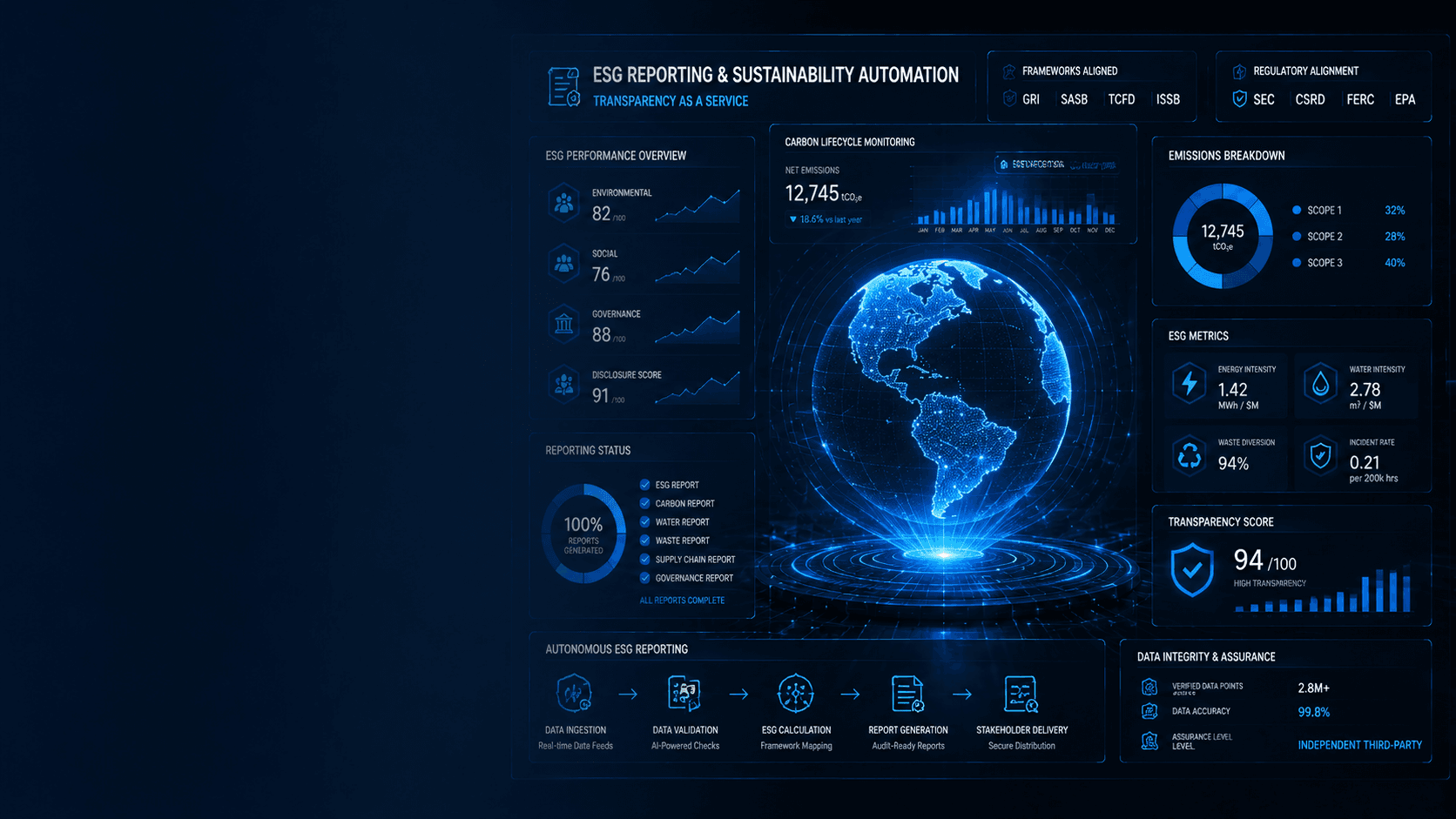
Prime Logic helps organizations understand, structure, and operationalize regulatory requirements across environmental compliance, infrastructure operations, permitting, reporting, audits, inspections, ESG disclosures, and data governance.
The PLS Competitive Advantage
From Regulatory Change to Operational Readiness
Environmental and infrastructure teams need more than alerts. They need systems that translate obligations into workflows.
The Fragmentation Problem
Regulatory information is often scattered across agencies, permit documents, legal updates, technical standards, spreadsheets, inspection findings, and internal compliance records.
The Operational Solution
Prime Logic’s regulatory intelligence approach focuses on organizing this information into practical software structures: obligations, deadlines, evidence records, workflows, alerts, approvals, dashboards, and reporting outputs. The goal is not to replace legal counsel. The goal is to help organizations convert regulatory complexity into better operational control.
The Implementation Gap
Understanding a rule is only half the battle. The true challenge lies in modifying reporting workflows, data pipelines, and field collection procedures to securely satisfy the new standard.
The Verification Standard
A system must not only execute workflows, but also produce immutable evidence, comprehensive audit logs, and clear documentation trails that conclusively prove the obligation was met.
The PLS Competitive Advantage
What We Track and Structure
A practical intelligence layer for compliance, reporting, and operational decision-making.
Regulatory Obligations
Permit conditions, reporting duties, inspection requirements, submission deadlines, corrective actions, and recurring compliance tasks.
Agency Updates
Relevant rule updates, guidance documents, enforcement trends, consultation notices, public agency communications, and reporting changes.
Standards & Frameworks
Environmental, infrastructure, ESG, data, security, and operational standards that shape how systems should be designed and documented.
Permit & Inspection Signals
Inspection findings, non-compliance patterns, audit observations, evidence gaps, and workflow bottlenecks.
Reporting Requirements
Data fields, submission formats, supporting evidence, review workflows, certification steps, and approval chains.
Operational Risk Indicators
Missed deadlines, incomplete records, unresolved corrective actions, unsupported claims, inconsistent data, and weak documentation trails.
Enforcement Precedents
Penalties, consent decrees, and warning letters that highlight emerging regulatory focus areas and compliance vulnerabilities.
Technological Mandates
New requirements for continuous monitoring, digital reporting formats (like CROMERR or XBRL), and data retention.
The PLS Competitive Advantage
Intelligence Categories
Organized around the operational domains where rules become software requirements.
Environmental Compliance
Permit rules, submission deadlines, and recurring compliance workflows.
Water & Wastewater
Effluent limits, sampling rules, and water utility compliance tracking.
Air & Emissions
Stack testing, GHG regulations, and air permit compliance mandates.
Waste & Materials
RCRA tracking, hazardous waste, and material reporting requirements.
Permitting & Renewals
Application procedures, renewal deadlines, and permit condition management.
Inspection Readiness
Audit criteria, field evidence records, and corrective action workflows.
ESG & Disclosure
CSRD, SEC rules, and enterprise sustainability reporting frameworks.
Infrastructure Risk
Critical asset regulations and operational risk management mandates.
Data Governance
Data retention rules, audit trails, and reporting security standards.
AI & Automation
Traceability and control frameworks for AI-assisted regulatory reporting.
Cybersecurity & Systems
CISA guidelines, ICS/SCADA security, and critical infrastructure rules.
Supply Chain Due Diligence
EUDR compliance, Scope 3 data, and supplier verification standards.
Featured Regulatory Intelligence Briefs
Practical notes for teams modernizing compliance and reporting systems.
CSRD Double Materiality: What 50,000 EU Companies Must Do Before 2026
The Corporate Sustainability Reporting Directive imposes a dual-lens analysis framework that fundamentally redefines how organisations assess and disclose environmental risk exposure.
PFAS: The Forever Chemical Regulatory Tsunami Heading for Every Water Utility
EPA's new Maximum Contaminant Levels for six PFAS compounds create an immediate compliance obligation affecting over 66,000 US public water systems with capital investment demands exceeding $1.5B annually.
Clean Water Act Section 404: Navigating the Post-Sackett v. EPA Wetland Permitting Landscape
The Supreme Court's 2023 Sackett v. EPA decision eliminated the significant nexus test for Section 404 jurisdiction, removing federal protection from an estimated 51% of previously regulated wetland acreage and forcing a fundamental re-architecture of environmental impact assessment workflows.
EU Taxonomy Regulation: Green Finance Classification and What It Means for Environmental Asset Owners
The EU Taxonomy Regulation's six environmental objectives and Do No Significant Harm criteria are now the primary determinant of green bond eligibility across €14 trillion in EU sustainable finance instruments, requiring environmental asset owners to produce Taxonomy-aligned revenue, capex, and opex ratios for the first time.
EPA NAAQS PM2.5 Tightening: Compliance Implications for 65 Million Americans in Non-Attainment Zones
EPA's February 2024 revision of the PM2.5 annual NAAQS from 12 μg/m³ to 9 μg/m³ places an additional 65 million Americans in non-attainment zones, triggering State Implementation Plan revision obligations and industrial permitting restrictions that will reshape air quality management across 99 U.S. counties.
Safe Drinking Water Act Lead and Copper Rule Revisions: The 10-Year Service Line Replacement Mandate
EPA's 2024 Lead and Copper Rule Improvements require all public water systems serving over 3,300 people to complete full service line inventories by October 2024 and replace all known or suspected lead service lines within 10 years — a mandate affecting an estimated 9.2 million lead service line connections across the United States.
SEC Climate Disclosure Rule: What 7,000 Public Companies Must Report Starting 2026
The SEC's March 2024 climate disclosure rule requires large accelerated filers to disclose Scope 1 and Scope 2 emissions with limited assurance beginning fiscal year 2026, while mandating material climate risk disclosures, scenario analysis summaries, and board oversight attestations across all registrant categories.
EU ETS Phase 4 Carbon Market: Free Allocation Phase-Out and the CBAM Border Adjustment Mechanism
The EU ETS Phase 4 (2021–2030) linear reduction factor of 4.3% per year combined with the Carbon Border Adjustment Mechanism's January 2026 full implementation creates the most significant carbon cost exposure event in EU industrial history, with cement, steel, aluminium, and fertiliser sectors facing effective carbon costs exceeding €150/tCO₂ by 2027.
NEPA Modernization Post-Fiscal Responsibility Act: Faster Reviews, Tighter Timelines, Higher Data Demands
The Fiscal Responsibility Act of 2023's NEPA amendments impose statutory page limits (150 pages for EAs, 300 pages for EIS), two-year EA completion deadlines, and four-year EIS deadlines — constraints that compress federal environmental review timelines but simultaneously escalate data quality and analytical rigour requirements.
Ready to initialize?
Access your dedicated Intelligence Dashboard.
How Regulatory Intelligence Becomes Software Architecture
Prime Logic translates obligations into system components, not just advisory notes.
Identify the Obligation
What rule, permit condition, reporting requirement, inspection finding, or institutional responsibility must be managed?
Define Operational Workflow
Who owns it? What data is required? What happens before, during, and after the obligation?
Structure the Data
What records, fields, documents, locations, assets, thresholds, dates, and approvals need to exist in the system?
Build the Controls
What reminders, validations, permissions, audit logs, escalation paths, and review steps are needed?
Integrate External Data
How will SCADA feeds, lab results, IoT sensors, or third-party APIs be connected to automate evidence collection?
Report and Retain Evidence
What outputs, dashboards, reports, exports, evidence packages, and historical records must be available?
Automate Audit Readiness
How can the system generate immutable compliance packages, board-ready disclosures, and regulatory submission exports?
Adapt to Change
Update workflows, thresholds, and system configurations seamlessly as regulatory requirements evolve.
Systems That Depend on Regulatory Intelligence
Regulatory understanding should shape the software architecture from the beginning.
Compliance Platforms
Obligation registers, calendars, corrective actions, evidence records, approval workflows, and audit trails.
Reporting Dashboards
Data validation, calculation logic, status views, deadline tracking, export workflows, and submission history.
Inspection Systems
Field records, findings, photos, notes, checklists, assignments, corrective actions, and closure evidence.
Environmental Monitoring
Parameters, thresholds, exceedances, stations, samples, sensor records, trend views, and exception alerts.
ESG & Disclosure Systems
Source records, review workflows, calculation assumptions, document retention, and approval controls.
AI-Assisted Workflows
Human review, traceability, source citation, version control, confidence limits, and restricted-use boundaries.
Ready to initialize?
Access your dedicated Intelligence Dashboard.
The PLS Competitive Advantage
Regulatory Intelligence With Clear Boundaries
Software can support compliance work, but it does not replace legal, regulatory, or professional judgment.
Purpose of Intelligence
Prime Logic’s regulatory intelligence content is designed to support software planning, workflow design, documentation, reporting readiness, and operational awareness.
Professional Boundaries
It should not be treated as legal advice, regulatory counsel, or a substitute for professional review. Organizations remain responsible for confirming applicable requirements with legal counsel.
Data Interpretation
Software systems calculate based on provided inputs, thresholds, and logic. They organize information but do not automatically guarantee compliance without proper human validation.
Authority Precedence
System architectures must ultimately defer to the specific interpretations of local permit writers, inspectors, and regional regulatory authorities.
Regulatory Intelligence Library
Briefs, checklists, system impact notes, and implementation references for regulated environmental operations.
Rule Briefs
Summaries of regulatory changes and their operational implications.
System Impact Notes
How changing rules affect software architecture and workflows.
Implementation Checklists
Actionable steps for deploying compliance systems.
Governance Notes
Best practices for data security, retention, and access control.
Technical Briefs
Deep dives into system integrations, APIs, and data models.
Risk & Controls Briefs
Strategies for mitigating operational and software-related risks.
Reporting Workflow Guides
Step-by-step guides for automating regulatory submissions.
Permit Management References
Frameworks for tracking obligations and evidence records.
Ready to initialize?
Access your dedicated Intelligence Dashboard.
NEXT STEPS
Need To Turn Regulatory Complexity Into A System?
Prime Logic can help structure environmental obligations, reporting workflows, inspection records, permits, evidence, and operational data into practical software architecture.
MAKE A CONSULTATION
We Provide Best Advice
For Your Future
Get expert advice tailored to your needs. Book a consultation with our professionals to discuss your project and take the next steps toward success.
Write a Quick Mail
support@primelogicsol.com
Office Hours
Monday-Friday: 9:00 AM - 6:00 PM (EST)
Saturday: By Appointment Only
Corporate Headquarters
11166 Fairfax Blvd Ste 500, Fairfax, VA 22030
Secure Consultation Intake
- ⬤ Encrypted Communications
- ⬤ NDA-Friendly Discussions
- ⬤ U.S. Data Residency
- ⬤ Enterprise Security Standards
America First
Institutional Data Sovereignty
Book Your Consultation
Secure Institutional Discovery